
HARNESSING EXTENDED DAYLIGHT HOURS: ALIGNING YOUR INTERNAL CLOCK WITH NATURE'S RHYTHMS
- Dott. Fabrizio Di Salvio

- 14 hours ago
- 9 min read
As the seasons transition and daylight hours gradually extend, we find ourselves presented with a remarkable opportunity to recalibrate our internal biological systems. The lengthening days of spring offer more than just warmer temperatures and blooming landscapes—they provide a natural catalyst for optimising our physiological functions through strategic alignment with environmental light patterns. Understanding how to harness these extended periods of natural illumination can profoundly transform your energy levels, mental clarity, and overall vitality. At Palazzo Fiuggi, we recognise that synchronising your body's innate temporal patterns with the natural world represents a cornerstone of comprehensive wellness, which is why our programmes are meticulously designed to help you establish this essential connection.

The human organism operates according to sophisticated internal timing mechanisms that orchestrate everything from hormone secretion to cellular repair processes. These biological oscillations, spanning approximately twenty-four hours, respond primarily to environmental light signals that enter through specialised receptors in the eyes. When these internal systems align harmoniously with external conditions, you experience optimal functioning across multiple physiological domains.
Conversely, when misalignment occurs—whether through artificial lighting exposure, irregular schedules, or insufficient natural light contact—the consequences manifest as disrupted rest patterns, diminished cognitive performance, metabolic irregularities, and compromised emotional stability. The arrival of spring, with its progressively longer daylight periods, presents an ideal window for recalibrating these systems and establishing healthier patterns that can sustain you throughout the year.
UNDERSTANDING YOUR BODY'S NATURAL TEMPORAL ARCHITECTURE AND INTERNAL CLOCK
Your internal biological clock operates through an intricate network of neural structures located deep within the brain's hypothalamic region. This sophisticated timing centre receives direct input from light-sensitive cells in the retina, which communicate information about environmental brightness levels.
Based on these signals, your body orchestrates a complex symphony of hormonal releases, temperature fluctuations, and metabolic adjustments that prepare you for activity during daylight hours and restoration during darkness. The primary regulatory hormone, melatonin, begins its secretion as evening approaches, gradually increasing throughout the night before declining as morning light appears.
Cortisol, conversely, peaks in the early morning hours, providing the physiological activation necessary for waking and engaging with daily demands.
These temporal patterns influence far more than simply when you feel sleepy or alert. They regulate digestive enzyme production, determining optimal times for nutrient absorption and metabolic processing. They modulate immune system activity, with certain defensive functions peaking at specific times.
They even affect cardiovascular parameters, with blood pressure and heart rate following predictable daily trajectories. When you honour these natural rhythms by aligning your activities, meal timing, and light exposure appropriately, you support your body's inherent wisdom. When you work against them—staying awake under bright artificial lights late into the evening, eating substantial meals at irregular hours, or remaining indoors throughout daylight periods—you create physiological discord that accumulates over time, manifesting as various health challenges.
The concept of individual chronotype adds another layer of complexity to this picture. Not everyone experiences these temporal patterns identically; genetic variations create natural preferences for earlier or later activity periods. Some individuals naturally wake with ease in the early morning and feel most productive during these hours, whilst others struggle with early rising and reach peak performance later in the day.
Recognising your inherent chronotype allows you to work with, rather than against, your biological predispositions. However, regardless of chronotype, certain fundamental principles apply universally: morning light exposure supports healthy temporal alignment, evening light restriction facilitates proper melatonin production, and consistent scheduling reinforces stable biological rhythms.
STRATEGIC MORNING LIGHT EXPOSURE FOR OPTIMAL SYNCHRONISATION
The single most powerful intervention for establishing robust biological rhythms involves deliberate exposure to natural illumination during the early hours following awakening. When bright light enters your eyes in the morning, it sends powerful signals to your internal timing centre, effectively "setting" your biological clock for the day ahead.
This morning light exposure accomplishes several critical functions simultaneously: it suppresses any residual melatonin production, stimulates cortisol release to promote alertness, initiates the countdown to evening melatonin secretion approximately fourteen to sixteen hours later, and enhances overall mood through effects on neurotransmitter systems. The intensity and spectral composition of natural daylight—particularly its blue wavelength components—make it far more effective than artificial indoor lighting for these purposes.
To maximise these benefits, we recommend stepping outdoors within thirty to sixty minutes of waking, ideally without sunglasses (though never looking directly at the sun). Even on overcast days, outdoor light intensity significantly exceeds typical indoor illumination levels. A morning walk, outdoor breakfast, or simply standing in natural light for ten to fifteen minutes can provide sufficient exposure to initiate these beneficial processes.
For those whose schedules or environments make outdoor access challenging, positioning yourself near windows during morning hours offers a secondary option, though the light intensity will be reduced compared to direct outdoor exposure. The key lies in consistency—establishing this practice as a daily ritual rather than an occasional occurrence.
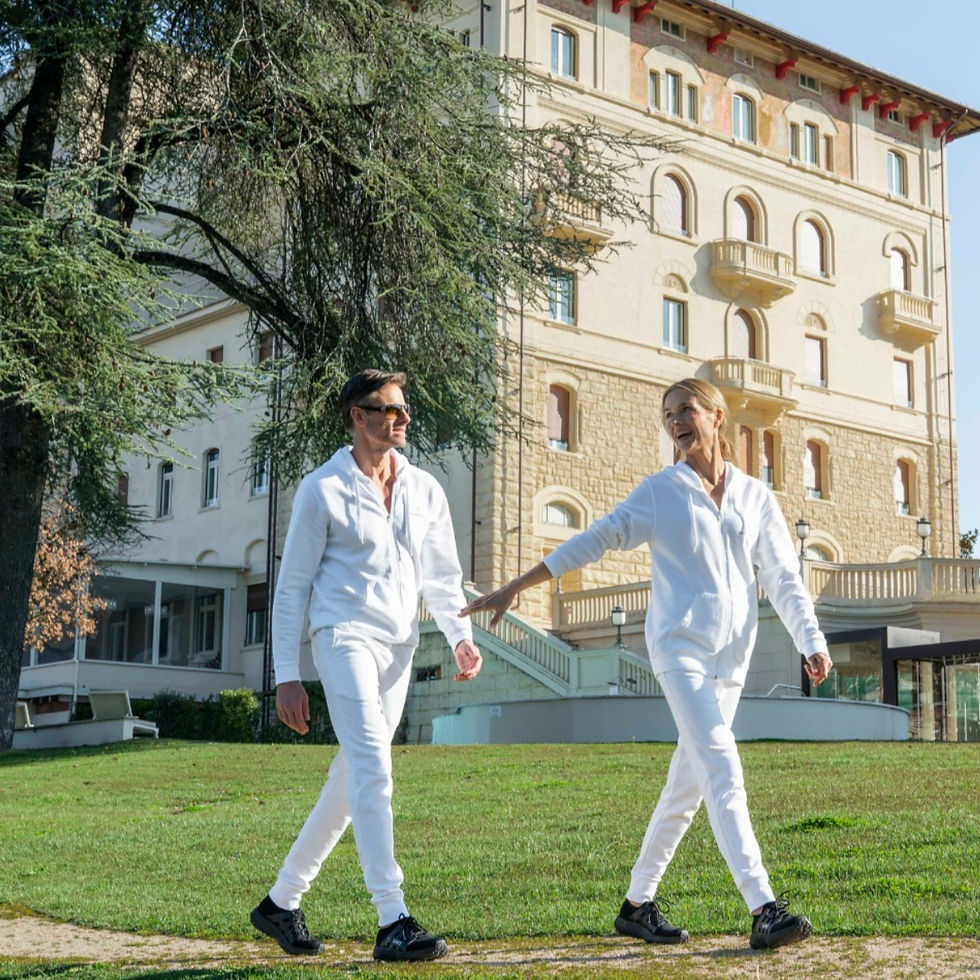
At Palazzo Fiuggi, our Hiking for Longevity programme exemplifies this principle beautifully. Scheduled for the first and third week of each month and commencing on Mondays, this group initiative combines morning outdoor activity with the therapeutic benefits of natural light exposure.
As you traverse the captivating panorama of the Apennines, you simultaneously receive optimal light signals whilst engaging in mindful movement through stunning natural landscapes. This dual benefit—physical activity paired with strategic light exposure—creates a powerful synergy for establishing healthy temporal patterns.
Our medical team conducts initial assessments to evaluate your starting condition and final evaluations to measure the tangible benefits achieved, ensuring that your participation yields measurable improvements in your physiological functioning.
STRUCTURING YOUR DAY ACCORDING TO NATURAL ENERGY FLUCTUATIONS
Beyond morning light exposure, aligning your daily activities with your body's natural performance peaks and valleys can dramatically enhance productivity, cognitive function, and overall wellbeing. Research demonstrates that most individuals experience distinct phases of mental and physical capability throughout the day, with these fluctuations following predictable patterns linked to underlying biological rhythms.
By scheduling demanding cognitive tasks during periods of peak alertness, physical activities during optimal performance windows, and restorative practices during natural energy dips, you work in harmony with your physiology rather than fighting against it.
For most people, the hours following morning awakening and light exposure represent a period of heightened mental clarity and focus, making this an ideal time for tasks requiring sustained attention, complex problem-solving, or creative thinking. As the morning progresses into midday, body temperature gradually rises, reaching its peak in the afternoon hours.
This temperature elevation correlates with enhanced physical performance, improved coordination, and faster reaction times, suggesting that afternoon periods suit vigorous exercise or physically demanding activities. The post-lunch period often brings a natural dip in alertness—a phenomenon observed across cultures and not solely attributable to meal consumption—indicating that this might be an appropriate time for less demanding tasks or, when possible, a brief restorative rest.
As evening approaches and natural light diminishes, your body begins its transition toward rest and recovery. This represents an ideal period for winding down, engaging in gentle movement practices, connecting with others, or pursuing relaxing activities. Attempting to maintain high-intensity productivity during these hours works against your natural physiology and can interfere with the evening melatonin rise necessary for quality sleep.
At Palazzo Fiuggi, we structure our programmes to honour these natural rhythms, scheduling medical treatments, therapeutic interventions, and dining experiences at times that support rather than disrupt your biological patterns. Our renowned three-Michelin-star chef Heinz Beck has collaborated with our Scientific Medical Team to create Mediterranean-inspired cuisine that not only delivers exceptional taste but also supports optimal metabolic function when consumed at appropriate times.

EVENING PRACTICES FOR PROTECTING YOUR NATURAL SLEEP ARCHITECTURE
Whilst morning light exposure sets your biological clock, evening light management protects it. The artificial illumination that pervades modern environments—particularly the blue-wavelength-rich light emitted by electronic screens—can significantly disrupt your natural melatonin production if encountered during the hours preceding sleep.
This disruption doesn't simply delay sleep onset; it can reduce overall sleep quality, diminish the restorative deep sleep phases, and create a cascade of effects that compromise next-day functioning. Protecting your evening hours from excessive artificial light exposure represents a crucial component of maintaining healthy biological rhythms, particularly as daylight hours extend and the temptation to remain active later into the evening increases.
We recommend implementing a gradual transition toward darkness during the two to three hours preceding your intended sleep time. This doesn't require sitting in complete darkness but rather involves dimming indoor lighting, using warmer-toned bulbs rather than cool white or blue-enriched lights, and minimising screen exposure. If screen use is unavoidable, employing blue-light filtering applications or wearing blue-blocking glasses can mitigate some of the disruptive effects.
Creating an evening routine that signals to your body that sleep approaches—perhaps including gentle stretching, reading physical books, practising relaxation techniques, or engaging in quiet conversation—helps facilitate the natural transition into rest.
The sleeping environment itself deserves careful attention. Complete darkness supports optimal melatonin levels throughout the night, so eliminating light sources from electronic devices, using blackout curtains, or wearing a sleep mask can enhance sleep quality. Temperature also plays a crucial role; your body temperature naturally decreases as part of the sleep initiation process, and a cooler room (approximately 15-19 degrees Celsius) facilitates this physiological requirement.
At Palazzo Fiuggi, we ensure that your accommodation supports these principles, creating an environment conducive to deep, restorative sleep that allows your body to complete its essential overnight repair and regeneration processes.
NUTRITIONAL TIMING AND METABOLIC SYNCHRONISATION
The timing of food consumption exerts profound effects on your biological rhythms, with emerging research revealing that when you eat may be nearly as important as what you eat. Your digestive system, metabolic enzymes, and hormonal responses all follow temporal patterns, with certain times of day favouring nutrient processing whilst others prioritise cellular repair and regeneration.
Aligning your eating patterns with these natural rhythms—a practice sometimes termed "chrononutrition"—can enhance metabolic efficiency, support healthy body composition, and reinforce overall biological synchronisation.
The principle of time-restricted eating suggests confining food consumption to a window of approximately twelve hours or less, allowing an extended overnight fasting period. This approach aligns with your body's natural preference for daytime feeding and nighttime fasting, supporting the metabolic processes that occur during each phase.
Consuming your largest, most substantial meal during midday hours, when digestive capacity peaks, and keeping evening meals lighter and earlier can optimise nutrient absorption whilst preventing the metabolic disruption that late-night eating can cause. Additionally, maintaining consistent meal timing from day to day helps establish predictable patterns that your body can anticipate and prepare for.
At Palazzo Fiuggi, nutritional excellence represents a fundamental pillar of our approach to comprehensive wellness. The Mediterranean-inspired food line created through the collaboration between Heinz Beck and our Scientific Medical Team exemplifies the fusion of culinary artistry with evidence-based nutritional science.
Each meal is thoughtfully composed not only for its health-promoting ingredients but also for its timing within your daily schedule, ensuring that what you consume and when you consume it work synergistically to support your metabolic health. Combined with the renowned benefits of Fiuggi's therapeutic waters and our various medical treatments, this nutritional approach creates a balanced, rejuvenating experience that addresses your complete physiological needs.

EMBRACING SPRING'S EXTENDED DAYLIGHT AS A CATALYST FOR TRANSFORMATION
The arrival of spring, with its progressively lengthening days, offers a natural opportunity to reset and optimise your relationship with light, activity, and rest. Rather than viewing the seasonal transition as merely a change in weather, we encourage you to recognise it as an invitation to recalibrate your daily patterns in alignment with nature's rhythms.
The additional daylight hours provide extended opportunities for outdoor activity, natural light exposure, and connection with the natural world—all elements that support robust biological functioning and enhanced wellbeing.
This seasonal window represents an ideal time to establish new habits that can sustain you throughout the year. Beginning a morning outdoor practice, restructuring your daily schedule to honour natural energy fluctuations, implementing evening light management strategies, or adjusting your meal timing can all be initiated during this transitional period when environmental conditions naturally support these changes.
The key lies in approaching these adjustments gradually and sustainably, allowing your body time to adapt and integrate new patterns rather than attempting dramatic overnight transformations that prove difficult to maintain.
At Palazzo Fiuggi, we provide the perfect environment for initiating this recalibration process. Our Hiking for Longevity programme, returning with spring's arrival, offers a structured yet flexible framework for establishing healthier patterns whilst immersed in the natural beauty of the Apennines.
Through mindful hiking experiences, comprehensive medical assessments, therapeutic treatments, and nutritional support, you receive the guidance and resources necessary to create lasting change. This programme provides an exceptional opportunity to reconnect with yourself, address your personal needs, and unlock potential that may have remained dormant due to biological misalignment.
CONCLUSION: YOUR JOURNEY TOWARD BIOLOGICAL HARMONY
Synchronising your internal biological systems with the natural rhythms of light and darkness represents one of the most fundamental yet frequently overlooked aspects of comprehensive health. As daylight hours extend with spring's progression, you have a remarkable opportunity to harness this environmental shift for profound personal benefit.
By implementing strategic morning light exposure, structuring your activities according to natural energy patterns, protecting your evening hours from disruptive artificial illumination, and aligning your nutritional timing with metabolic rhythms, you create the conditions for optimal physiological functioning.
These practices require neither expensive equipment nor complex interventions—simply awareness, intention, and consistency. The rewards, however, extend far beyond improved sleep or enhanced energy.
When your biological rhythms align harmoniously with environmental conditions, you experience improvements across multiple dimensions: cognitive clarity, emotional stability, metabolic efficiency, immune function, and overall vitality. You move through your days with greater ease, accomplish tasks with enhanced focus, and rest more deeply, allowing your body to complete its essential regenerative processes.
We invite you to embrace this seasonal transition as a catalyst for positive change. Whether through participation in our Hiking for Longevity programme, implementation of the principles outlined here, or simply increased awareness of how light exposure affects your daily experience, you can begin creating the biological harmony that supports lasting wellness.
At Palazzo Fiuggi, we stand ready to support your journey with our comprehensive medical expertise, therapeutic interventions, and nurturing environment. Together, we can help you establish the patterns that allow you to thrive in alignment with nature's wisdom, unlocking your full potential for health and vitality.

Comments